
Hershey, Pennsylvania
Main Shut Off Valve Replacement Hershey: Curb Stop & Valves
The handle will not turn when you need it most. One call connects you with a local main water line pro for main shut off valve replacement Hershey homeowners rely on, plus curb stop help at the property edge.
Serving Hershey, PA. Calls answered 24/7.
Two valves guard your home
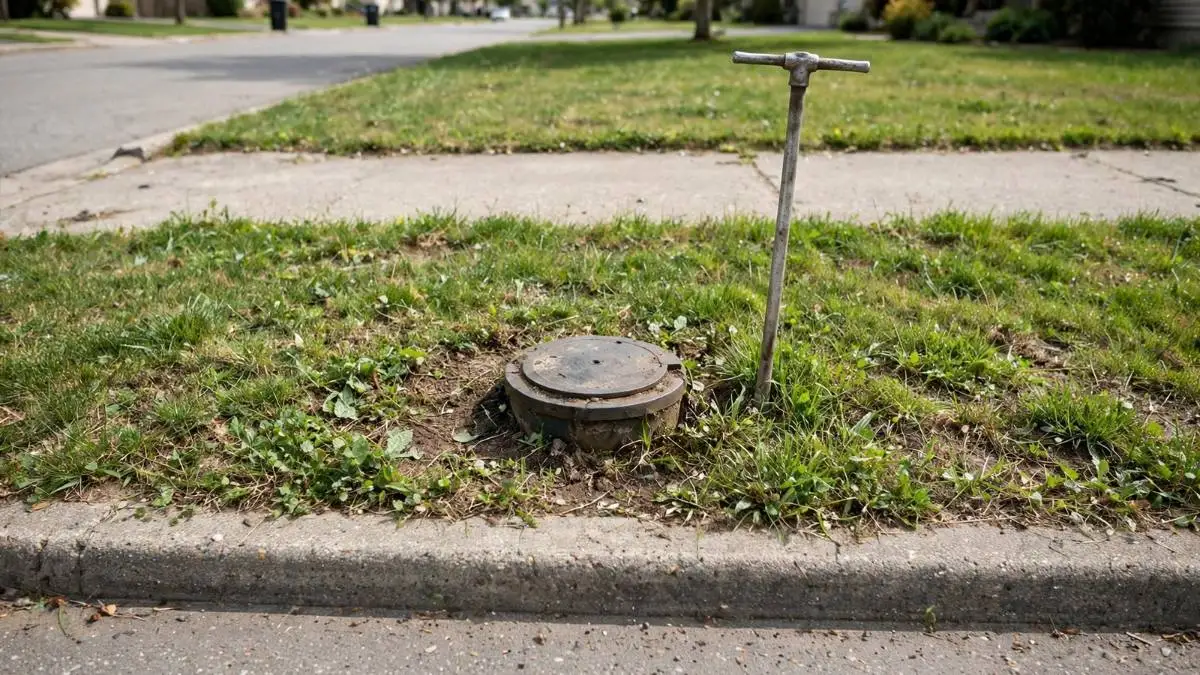
The main shut-off sits inside the house where the line enters. The curb stop sits at the property edge, in a small box by the sidewalk. Know where both are before an emergency.
Old valves fail quietly
Multi-turn gate valves corrode inside over decades until the handle will not move or the valve will not seat fully shut. Replacement is the fix when the valve stops doing its job.
Curb stop work often needs the provider
The curb stop sits near the ownership split, so the job is usually coordinated with the water provider rather than handled alone. The pro knows how that coordination works locally.
The valve you never think about until you need it
A pipe is spraying in the basement, or a fixture will not stop running, and the shut-off handle will not budge. The valve job homeowners call us about is rarely a planned job. It is the valve that sat untouched for years, failing on the day you needed it most.
We connect Hershey homeowners with experienced local main water line pros. The technician we dispatch repairs or replaces the failed indoor valve, and curb stop valve replacement at the property edge is handled with the provider where coordination is needed. Straight answers on the phone, upfront pricing before any work.
Sound familiar?
- A main shut-off handle that will not budge at all
- A valve that drips or weeps around the stem
- Water that keeps flowing with the valve fully closed
- A curb box that is buried, broken, or packed with dirt
- No shut-off valve to be found anywhere inside the house
- Corrosion or crusty buildup on the valve body
Main shut off valve replacement Hershey: what these two valves do
Two valves stand between your home and an uncontrolled flow of water. The main shut-off sits inside the house, on the service line where it enters, usually the basement wall in older Hershey homes. It is the valve you reach for when a pipe bursts or a fixture will not stop running.
The curb stop sits outside at the property edge, usually in a small box near the sidewalk, and it controls the same line from the street side. It takes a special key to operate, and working it often involves the water provider. Think of the indoor valve as the one you use any day, and the curb stop as the backup that guards the whole service. Most valve jobs start with one of these two valves.
Main water shut off valve leaking: how valves fail
Valves fail quietly over decades. Gate valves, the multi-turn kind common in older homes, corrode inside until the handle will not move or the gate no longer seats. Packing around the stem dries out and starts to weep. Mineral crust builds up on every surface. A main water shut off valve leaking at the stem is often the first visible sign, and the failure usually announces itself at the worst moment: the day you need the valve to work.
Forcing a seized handle is how small problems become large ones. A stem can snap or a joint can start leaking the moment real torque is applied. If the handle resists, stop and leave the valve alone. A pro frees or replaces it without breaking what is around it, and a main water shut off valve leaking today is the signal to act before an emergency forces the issue.
What it takes to replace main shut off valve hardware indoors
Most visits for the indoor valve follow the same compact pattern. The water gets shut off at the curb stop, the old valve comes out, and a modern full-bore valve goes in its place. The new valve turns with a quarter turn, seats firmly, and shows its position at a glance. The line is then reopened and checked for weeps at the joints.
Because the work happens inside, there is no digging and no yard to restore. If the indoor valve is original to an older home, it is worth having the pro look at the line it sits on at the same time. If a full line renewal is on the cards as well, our main water line replacement page explains how the whole run gets renewed.
Curb stop valve replacement and the provider's role
Curb stops live a hard life. Buried boxes fill with dirt, lids break underfoot, frost heaves the box out of alignment, and the valve itself seizes from disuse. When a curb stop needs attention, the work usually involves the water provider, because the valve often sits on or near the ownership split. We name no providers here; the pro handling your call knows how the coordination works locally.
Ownership is the usual question, and the usual answer is that the split varies: the provider often owns up to and including the curb stop while the homeowner owns the line from there to the house, but check with your water provider rather than guessing. If a curb stop valve replacement lines up with a failing service line, the two jobs are sometimes handled together.
Why a working shut-off matters when minutes count
A burst supply line or a fixture that will not stop running turns a working shut-off into the most valuable valve in the house. One firm quarter turn stops the water and turns a flood into a cleanup. Without it, you are waiting on a curb stop key, a provider crew, or a pro with tools while water keeps coming.
That is the real argument against postponing valve service. The valve asks little of you until the day it saves the floors, and that day never announces itself in advance. If a failing line caused the emergency that exposed the bad valve, our main water line repair page covers how the line itself gets fixed.
Hershey homes: valves by era
Downtown Hershey's early-1900s homes often still have their original multi-turn gate valves, the kind most likely to seize after decades of disuse. The mid-century subdivisions and Palmdale's post-war homes tend to have newer indoor valves but aging curb boxes, many buried under lawn growth or shifted by frost heave.
Curb boxes along sidewalks and driveway edges take the most abuse from foot traffic and plows, and cold winters heave boxes out of alignment across the ZIP. Valve calls come from every era, but the oldest homes produce the seized gate valves and the mid-century streets produce the buried curb boxes. For the neighborhood picture, see our water line replacement in Palmdale page and our water line replacement in Derry Township page.
Valve questions from Hershey homeowners
Follow the water line in from the street side. In Hershey's older homes with basements, the shut-off is usually on the basement wall where the service line enters, often near the water meter. In homes on slabs, look in the garage or on an exterior wall where the line comes up. The valve sits on the main line before it branches to fixtures. If you cannot find one, say so on the call: a house with no working shut-off is exactly what this page is about.
The valve is not seating fully, usually because mineral buildup or wear has damaged the sealing surfaces inside. The handle moves, but the gate or ball no longer closes the opening. Do not keep cranking it: that tends to finish off an already weak valve. A pro replaces it so it seats firmly shut. Until then, the curb stop at the property edge can stop the flow from outside.
You probably should not. Curb stops need a special key, and forcing a seized valve can break it at a point where the repair may involve the provider. Buried boxes can also hide other utilities close by. Leave the curb stop to the pro, who knows how the coordination with the provider goes on your street.
It depends on where the ownership split falls. The provider often owns everything up to and including the curb stop, with the homeowner responsible from there to the house, but the split varies, so check with your water provider rather than guessing. That split decides who maintains the valve and who pays when it fails. The pro can usually read the layout on site and tell you how it falls for your address.
Yes, for the indoor valve. The pro needs access to where the line enters the house and to the main shut-off itself, and you will want to hear the plan and the pricing before work starts. Clear the area around the valve and the path to it.
Most often a full-bore ball valve, the kind that opens and closes with a quarter turn of the handle. It gives water a straight, unrestricted path when open and seats firmly when closed, and you can see at a glance whether it is open or shut. That is the standard valve pros install today. The pro picks the right size and style for your line and explains the choice before work starts.
Usually, yes, with an access opening. The pro cuts the smallest opening that allows the old valve out and the new one in, then the patch goes back over it. Describe the setup on the call so the pro arrives with the right plan.
Then installing one is the job, and it is worth doing soon. A house with no main shut-off has no way to stop the water quickly in an emergency, which is exactly the risk this page describes. The pro adds a modern full-bore valve where the line enters the house, and confirms the curb stop works as the backup. One call starts that fix.
Main shut off valve replacement Hershey starts with one call
One call connects you with an experienced local main water line pro who repairs or replaces a failed valve and coordinates curb stop work where needed. Calls are answered 24/7, pricing is explained upfront, and a valve fix you can trust begins with a straight answer.
Get your shut-off valve checkedCalls answered 24/7.