
Hershey, Pennsylvania
Water Line Leak Detection Hershey: Find the Exact Leak
Wet lawn, climbing bill, a meter that will not sit still. Water line leak detection in Hershey connects you with experienced local pros who pinpoint buried leaks with listening gear and pressure tests, not guesswork and trenches.
Serving Hershey, PA. Calls answered 24/7.
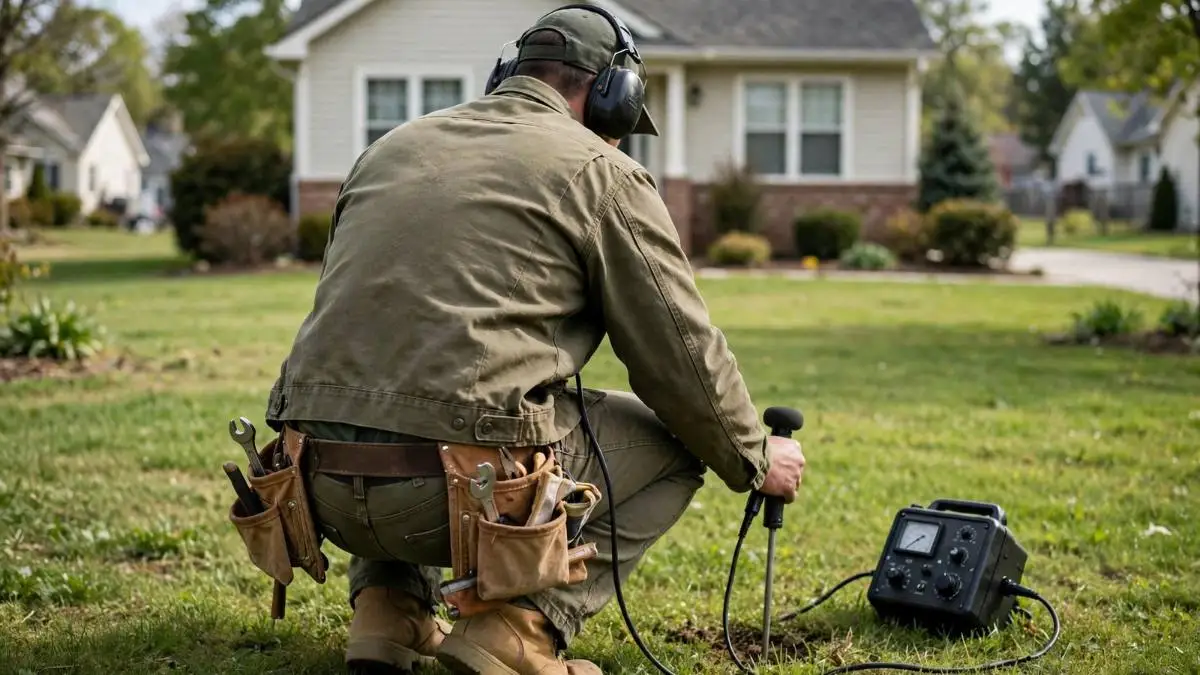
The meter test comes first
One safe check you can run yourself turns a vague worry into a confirmed leak. Water line leak detection in Hershey starts from your result, not from zero.
Marked, not guessed
Acoustic listening, line tracing, and pressure testing converge on one marked spot, so any repair digs once in the right place.
Priced before work starts
Upfront pricing is explained on the phone, with no hidden fees.
Something is off and you can feel it before you can prove it. The lawn has a patch that never dries. The water bill jumped and nobody changed their habits. You stand at the meter box and the dial creeps while every tap in the house is off. Water line leak detection in Hershey takes it from there: a buried leak does not need a flooded yard to be real, and finding it does not need heavy equipment tearing up the lawn.
When you call (717) 971-8830, this site connects you with an independent local pro who confirms your meter reading and locates the leak before recommending any repair.
The water meter moving with taps off: run the test step by step
The meter test is the one check you can safely do yourself. First, make sure no water is running anywhere: taps off, appliances off, nobody flushing. Then find your meter, usually in a box near the curb, and photograph the dial.
Wait an hour without using any water, then check again. If the dial has moved with everything off, water is escaping somewhere between the meter and your fixtures. That single result turns a vague worry into a confirmed leak and gives the pro a head start on your water line leak detection in Hershey visit.

Signs outside the house
A buried leak speaks through the surface: a strip of lawn that stays damp or sinks slightly along the line's route from the street to the house. A wet spot in yard soil that keeps returning after dry weather is one of the strongest outdoor clues. Grass over a leak often grows faster and greener, fed by the constant moisture.
Other signs are subtler: water pooling near the foundation or walkway, soil that feels spongy underfoot, or a patch of ground that stays thawed in winter where escaping water warms the soil. None of these prove the leak's exact location, but together they tell the pro where to start listening during your water line leak detection in Hershey visit.
Pinpointing an underground water leak: how pros locate buried leaks
Once the meter test confirms a leak, the pro narrows the location with acoustic listening gear, pressure testing that isolates sections of the line, and line tracing that maps the pipe's exact path.
The result is a marked spot on the lawn, not an exploratory trench across it. That precision is the whole value of water line leak detection in Hershey: the repair crew digs once, in the right place. Get the leak marked, not guessed
A leak on the line vs. a leak inside the house
Not every moving meter means a buried line. Toilets with silent flapper leaks, a dripping water heater relief valve, or an outdoor spigot left cracked can all move the dial. The pro's first job is ruling those out: does the meter still move with the house's main shut-off closed?
If it stops, the leak is inside the house plumbing. If it keeps moving, the water is escaping between the meter and the shut-off, which points to the buried service line. When pressure loss rather than a leak is the main symptom, our low water pressure main line diagnosis page covers that separate trail.
What happens after the leak is found
Finding the leak is the midpoint, not the finish. The pro marks the spot and explains what the repair involves: a targeted excavation at the mark, the failed section replaced, a pressure test, and the ground restored. You get upfront pricing before any digging, with no hidden fees, and your water line leak detection in Hershey visit ends with a marked spot and a clear plan.
Sometimes the find changes the plan. If the exposed pipe shows widespread corrosion or the line has failed before, the honest recommendation may be replacing the full run instead of patching one more section. For very old lines, our page on old water service line replacement explains the full-line option. In Hockersville's older streets and Palmdale's post-war blocks, this fork is common; see water line replacement in Hockersville and water line replacement in Palmdale for those areas.
Hershey homes: where hidden leaks hide
Downtown's early-1900s homes carry the oldest service lines in Hershey, running under mature tree roots and through basements. Leaks there often show as damp walls near the entry point or soggy strips along tree-lined routes.
In the mid-century subdivisions, leaks tend to surface as lawn symptoms first: the extra-green strip, the spongy patch. Palmdale's post-war lines are at the age where joints fatigue, and Hockersville's mix of older and newer homes means the pro checks the line's era before assuming anything. Water line leak detection in Hershey works the same way on every era: confirm with the meter, then pinpoint before anyone digs.
What to do while you wait
- Run the meter test and photograph both readings.
- Shut off the main valve if water is pooling or the meter spins fast.
- Keep people and pets off soft or sunken ground.
- Note where and when each symptom first appeared.
- Do not dig to find the leak; mark what you see from the surface instead.
Water line leak detection questions from Hershey homeowners
The meter test is the divider. With all water off, a moving dial confirms a leak somewhere in the system. Then comes the shut-off test: close the house's main valve and watch the meter again. If the dial stops, the leak is inside the house plumbing; if it keeps moving, water is escaping between the meter and the shut-off, which points to the buried service line.
Yes, and those are the leaks that run the longest. Water escaping from a buried line does not always rise to the surface. It can drain into gravel bedding, follow the trench back toward the street, or dissipate into sandy soil. The only evidence may be the moving meter and a bill that keeps climbing. That is why the meter test matters more than a look around the yard: it catches the leaks the eye cannot see.
No. Detection is a non-invasive process: listening equipment on the surface, pressure gauges on accessible fittings, and tracing tools that map the line without breaking ground. Nobody digs during detection. The point is to mark the leak's location first, so any repair opens one small, precise spot instead of trenching across the yard.
Then you have saved yourself a yard excavation, which is a good outcome. Indoor culprits are usually straightforward: a toilet with a silent flapper leak, a dripping relief valve on the water heater, a supply line under a sink, or an outdoor spigot that never fully closed. The pro helps you narrow it down.
On a typical residential service line, a skilled pro using acoustic listening and pressure testing narrows the leak to a small, marked area. Precision depends on conditions: depth, soil type, background noise, and how many fittings sit along the run.
That depends on the symptoms. Pooling water, sinking ground, or a fast-spinning meter means shutting off the main valve until the pro arrives. With subtler signs you can usually leave the water on and limit use. Either way, photograph the meter now so the pro has a starting reading.
Yes, because a buried leak runs around the clock. A drip you would ignore from a tap becomes significant when it flows twenty-four hours a day for weeks or months, and most buried leaks flow far more than a drip. If your bill jumped without any change in household habits, a leak is worth checking, and the meter test takes an hour to confirm or rule out.
A moving meter with no visible sign is the textbook case for professional water line leak detection in Hershey, not a reason to wait. The water is going somewhere, and every day it runs adds to the bill and softens the ground along the line's route. Call and describe what you did: the meter test, the readings, the lack of surface signs. The technician we dispatch brings the listening gear and pressure testing needed to find what your eyes cannot.
Stop guessing. Find the leak with water line leak detection in Hershey.
A moving meter, a damp patch, a bill that makes no sense: that is all the pro needs to start. One call connects you with an experienced local tech for water line leak detection in Hershey, who will pinpoint the problem and explain the fix.
Book water line leak detection in HersheyCalls answered 24/7.