
Hershey, Pennsylvania
Old Water Service Line Replacement Hershey: Galvanized & Lead-Era Lines
Your morning tap runs brown and the shower keeps losing pressure. One call connects you with a local main water line pro who identifies your old line and explains old water service line replacement Hershey options in plain terms.
Serving Hershey, PA. Calls answered 24/7.
Identify the material first
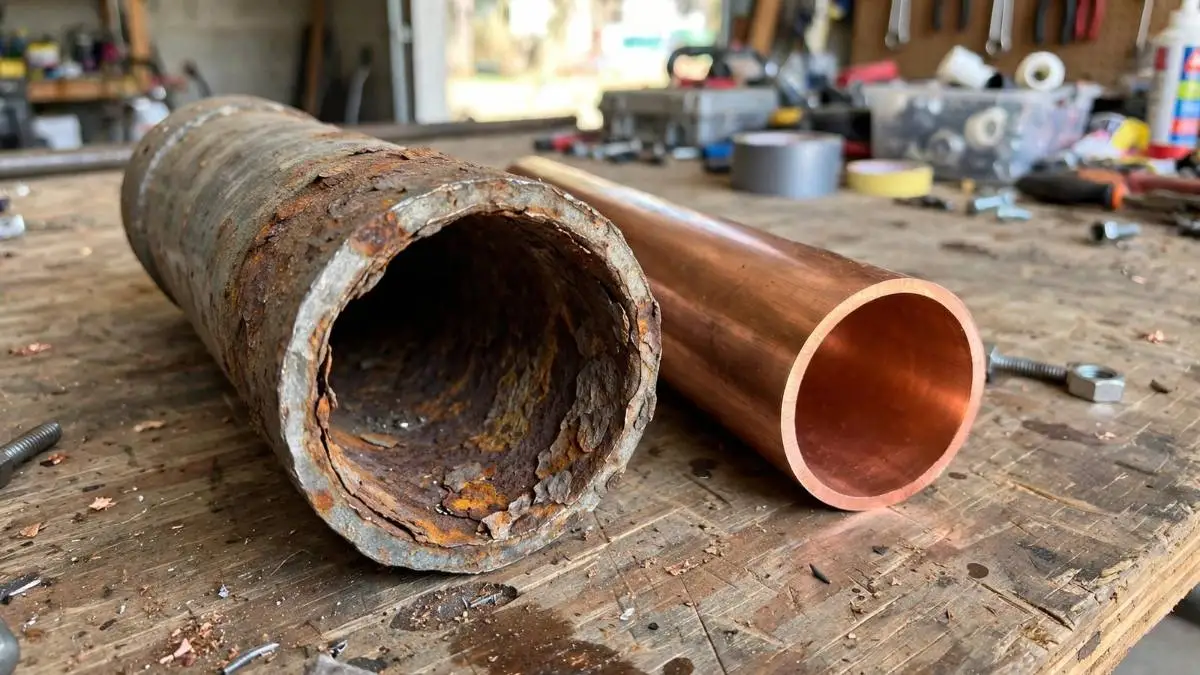
A pro confirms whether the line is galvanized steel or a lead-era material before any digging is planned. The visible section at the wall is only part of the story.
Brown water and fading pressure are the tells
Corrosion narrows an old line from the inside, so the morning tap runs brown and pressure fades a little more each year. That is the pattern that ends in a full line replacement.
The private side is usually yours
The run from the meter, curb stop, or property line to the house is usually the homeowner's responsibility, but the split varies, so check with your water provider before assuming.
Your water trouble may start under the yard
The tap runs brown for the first minute each morning, and the shower is weaker than a year ago. Replacing an old service line usually starts with those two complaints: a buried line installed when the house was built, now narrowed by corrosion from the inside.
We connect Hershey homeowners with experienced local main water line pros. The technician we dispatch identifies what the line is made of, says whether age is behind the symptoms, and explains what replacing the line involves on your lot. You get straight answers on the phone and upfront pricing before any work begins.
Sound familiar?
- Rusty or brown water that clears after the tap runs a bit
- Pressure that faded slowly over the years, not overnight
- A dull gray pipe, narrower than expected, where the line enters the basement
- A service line original to a home built before the 1960s
- Neighbors on your street who already replaced their lines
- Brown staining in sinks and tubs that keeps coming back
Old water service line replacement Hershey: how to tell what your line is made of
Start where the line enters the house: in Hershey's older homes that is usually the basement wall, and the first few feet of pipe are often exposed. A dull gray pipe that a magnet sticks to is usually galvanized steel. A dull gray pipe that feels soft and is not magnetic points to an older material, and some older lines were made of lead.
Color alone proves nothing, because paint and corrosion hide plenty, and repairs over the decades join new material to old, so the pipe at the wall is not always what runs through the yard. A pro identifies the material with confidence and can say whether the whole run matches the section you can see. Ask for that identification on the call: it is the first step of any replacement plan.
| What you see at the wall | The magnet test | What it usually means |
|---|---|---|
| Dull gray, hard pipe with threaded joints | Sticks | Galvanized steel |
| Dull gray, soft pipe with a dull finish | Does not stick | An older material; only a pro can name it |
| Coppery brown pipe | Does not stick | Copper, often from a later replacement |
| White or blue plastic pipe | Does not stick | Modern pipe, often from a later replacement |

Galvanized water line replacement: why older galvanized lines lose pressure and discolor water
Galvanized steel corrodes from the inside out. Over the decades, rust and mineral scale build up on the inner walls and the opening the water flows through keeps shrinking. That is why pressure fades gradually instead of dropping overnight, and the cold tap usually shows it first.
The same corrosion explains the morning brown water. Rust flakes settle in the pipe overnight and stir up when water starts moving, so the first draw of the day looks worst and later draws run clear after a minute or two of flow. The clearing is not the pipe healing: the corrosion keeps narrowing the line until it is addressed. For many homes, a galvanized water line replacement is what the job usually ends up meaning, and our page on low water pressure main line explains how a narrowed line throttles flow.
Lead water service line material: what we can and cannot tell you
Some older service lines were made of lead, and a pro can identify the material. That is the full extent of what this page can tell you: we do not guess about pipe materials over the phone, and we make no claims about water quality in either direction.
Keep two questions separate. Questions about the water itself belong with your water provider, which tests and reports on what it delivers. Questions about the pipe in the ground, its age, or what replacement involves belong with a local main water line pro, and the pro's identification moves a lead water service line question from guessing to knowing.
Provider inventories and replacement programs: ask your water provider
In many places, water providers keep inventories of service line materials and run replacement programs of their own. We cannot say what your provider offers, and we name no providers here. The direct move is to ask yours what is on file.
Know this before you call them: the private side is usually the homeowner's responsibility from the meter, curb stop, or property line to the house, but the split varies, so check with your water provider rather than assuming. Anything on the provider's side of that split is their line to maintain.
Old water pipe to house: replacing the private side
When the old line has to go, the work covers the private run from the connection point to the house. The technician exposes the line, lays the new pipe, connects both ends, and tests the flow before backfilling. On many lots that means an open trench; where driveways, trees, or hardscape sit in the way, trenchless methods pull or bore the new line in with far less digging.
Mature trees, driveways, and landscaping often decide the route, and the shut-off valve at the house end is usually part of the same conversation. If the valve at the basement wall is seized or weeps, our main shut off valve replacement page explains how those valves fail and get replaced. Pricing is explained upfront before work begins.
Hershey homes: where old lines hide
Downtown Hershey holds the oldest housing in the ZIP: early-1900s brick and frame homes from the planned factory town, with basements and mature street trees. These lots most likely still carry their original service lines, and a gray pipe at the basement wall tells the oldest story in town.
The mid-century subdivisions spreading north and south of downtown have lines from the 1950s to the 1990s, now at an age where corrosion and joint failure start to show, and Swatara Station's older small homes sit on some of the same early pipe. Cold winters and freeze-thaw cycles stress every buried line in the ZIP, and the oldest streets produce the most calls about old service lines. For the neighborhood picture, see our water line replacement in Derry Township page and our water line replacement in Swatara Station page.
Old service line questions from Hershey homeowners
Look where the line enters the house, usually the basement wall in Hershey's older homes, and note the color and whether a magnet sticks: dull gray pipe that is magnetic is usually galvanized steel. That visual check is only a start, because repairs over the years can join new sections to old pipe. A pro confirms what the full run is made of, which is the first step before any replacement plan is drawn up.
It means the material gets identified before anything is planned. Some older lines were made of lead, and a pro can identify the material on site. The plan itself is the same honest work: identify the material, assess the condition, and replace the private side when the line is done.
Not usually. The route runs from the connection point to the house, and the crew keeps the dig to that corridor. Where driveways, walkways, or mature trees sit in the way, trenchless methods can pull or bore the new line through with small access pits instead of an open trench. The ground is backfilled and graded when the job is done.
A partial galvanized water line replacement is sometimes possible, but it is rarely the tidy saving it sounds like. Joining new pipe to a corroded old section leaves the weak material in the ground, and the old section keeps narrowing and flaking. A technician can give a straight opinion on whether a partial fix makes sense or the whole private side should go at once.
Call your water provider and ask. In many places providers keep inventories of service line materials, and only yours can say what is on file for your address. While you have them on the line, confirm where their responsibility ends and yours begins, since the split varies.
Often, yes, when the old line is the bottleneck: corrosion narrows galvanized pipe from the inside, so household demand squeezes through a smaller opening and pressure falls. A new line restores the full opening. But low pressure has other possible sources, including the main shut-off valve, the pressure regulator, or the provider's side. A pro tests first.
Usually it does. The new line typically follows the old route to the same entry point, which keeps the work simple and avoids new holes in the foundation. The shut-off valve at that entry point is often replaced in the same job, and the pro confirms the route on site before anything is dug.
No website can answer that for your sale. Buyer inspections sometimes flag an aging service line, and some buyers ask for a replacement or a credit before closing. The useful move is to know what you have: a pro can identify the material and condition of your line, and then you and your agent decide how to handle it.
Old water service line replacement Hershey starts with one call
One call connects you with an experienced local main water line pro who identifies the material, explains the private side of the job, and gives upfront pricing before any work begins. Calls are answered 24/7.
Ask what replacing your old line involvesCalls answered 24/7.